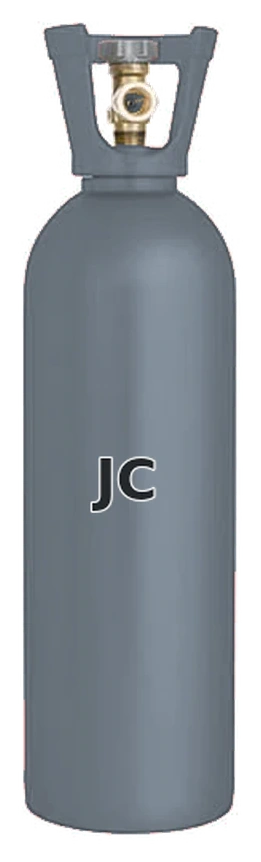
Five industrial gas families serve different equipment and process requirements
Oxygen, argon, nitrogen, carbon dioxide and dissolved acetylene are different gas services. The equipment application determines the required cylinder configuration, pressure rating, valve connection and documentary checks.
Industrial oxygen is used in processes that depend on oxygen as a reactant or oxidising gas. The empty cylinder must suit the planned service, valve and pr…
Explore applications →Argon is an inert shielding gas in many welding processes and a controlled-atmosphere gas in selected industrial equipment. Empty argon-cylinder hardware s…
Explore applications →Industrial nitrogen is used for inerting and purging where the equipment design requires a controlled nitrogen supply. Empty cylinders should be specified …
Explore applications →Carbon dioxide cylinders are used with equipment that requires CO₂ service, including selected welding systems. Cylinder water capacity, permitted filling …
Explore applications →Dissolved acetylene cylinders are designed around a porous mass and solvent arrangement appropriate to acetylene service. These purpose-built containers ca…
Explore applications →Gas applications determine the important cylinder specifications
Cylinder selection begins with the equipment specification, then matches the permitted cylinder service and its manufacturer-marked properties. Gas names alone do not determine a particular cylinder size or suitable valve.
| Application family | Typical technical questions |
|---|---|
| Oxygen (O₂) | Cutting, heating or another specifically identified process. Check capacity, pressure and fittings. |
| Argon (Ar) | TIG, selected MIG shielding, purging or inert atmosphere. Check capacity, pressure and fittings. |
| Nitrogen (N₂) | Purging, inerting, maintenance or other specified service. Check capacity, pressure and fittings. |
| Carbon dioxide (CO₂) | Welding, industrial equipment or specifically qualified application. Check capacity, pressure and fittings. |
| Dissolved acetylene (DA) | Purpose-built dissolved acetylene cylinder only. Check capacity, pressure and fittings. |
Water capacity, pressure, construction and valve connections need separate checks
Water capacity is the cylinder’s internal volume. A pressure rating defines a different technical limit, and fittings determine whether the intended regulator or manifold can connect. Cylinder base geometry, shell design, dimensions and tare weight also affect handling.
For dissolved acetylene, internal porous-mass and solvent construction add service-specific requirements. For CO₂, water capacity and allowable gas-charge mass are not the same attribute.
New and used empty cylinders require different verification evidence
For new cylinders, request the applicable manufacturer and BIS/PESO evidence for the exact model. For used cylinders, check the serial identification, present condition and available inspection or requalification records separately. Neither paint colour nor an older certification mark alone establishes current suitability.
Compare new cylinders · Review used-cylinder buying checks · Understand documentation
What should an industrial buyer include in a cylinder application enquiry?
Identify the equipment, intended gas service, new or used condition, approximate quantity and destination. Include the water capacity, rated pressure, cylinder model, construction, valve connection, dimensional restrictions and required paperwork when known. Unknown specifications can be discussed before a quotation.
The buyer must confirm specialised medical, food or process suitability from appropriate model and regulatory evidence rather than treating an application example as product approval.
Request a gas-service-specific quotation from Jay Consultant
Jay Consultant sources new and used empty industrial cylinders in India and assesses the exact offered product against buyer requirements. Quotes include the agreed scope, price and applicable paperwork.
Specify the gas service, equipment, quantity and delivery city.
Request for quotation ↗